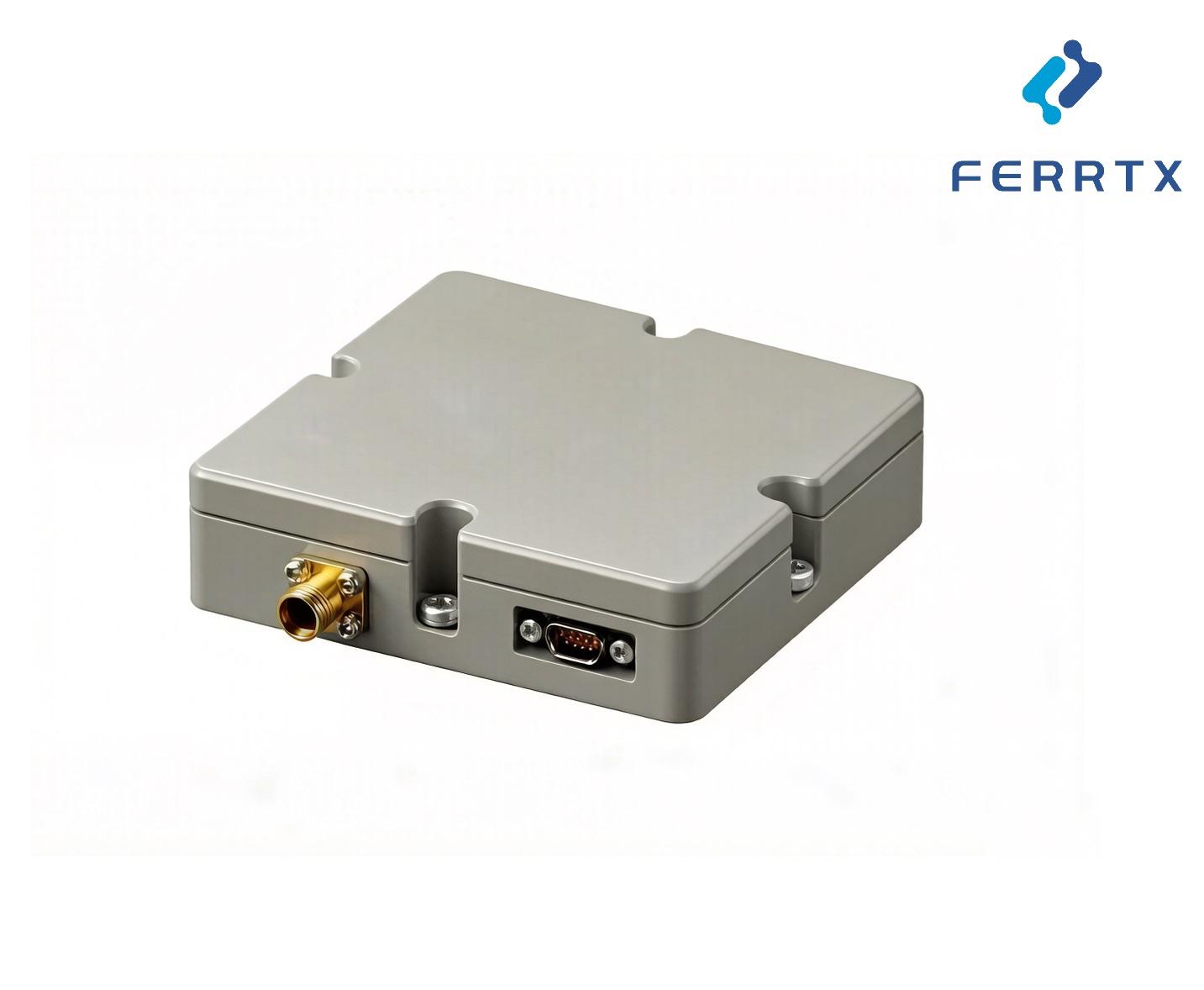
Integrated GNSS Anti-Jamming Receiver Module for UAV Navigation Systems
Compact integrated GNSS receiver module designed for UAV, autonomous vehicle, and RF interference environments with stable GPS/BDS positioning capability.
Why GNSS Anti-Jamming Matters?
GNSS signals reach the ground at around -130dBm—making them highly vulnerable to interference. A single 1W jammer can disrupt satellite reception across several kilometers, and without protection, positioning loss may quickly lead to fly-away or collision risks. The HFD2101-2 integrated anti-interference receiver is designed to maintain stable GPS/BDS positioning when standard GNSS receivers lose lock.
Key Features
Compact Integrated Design
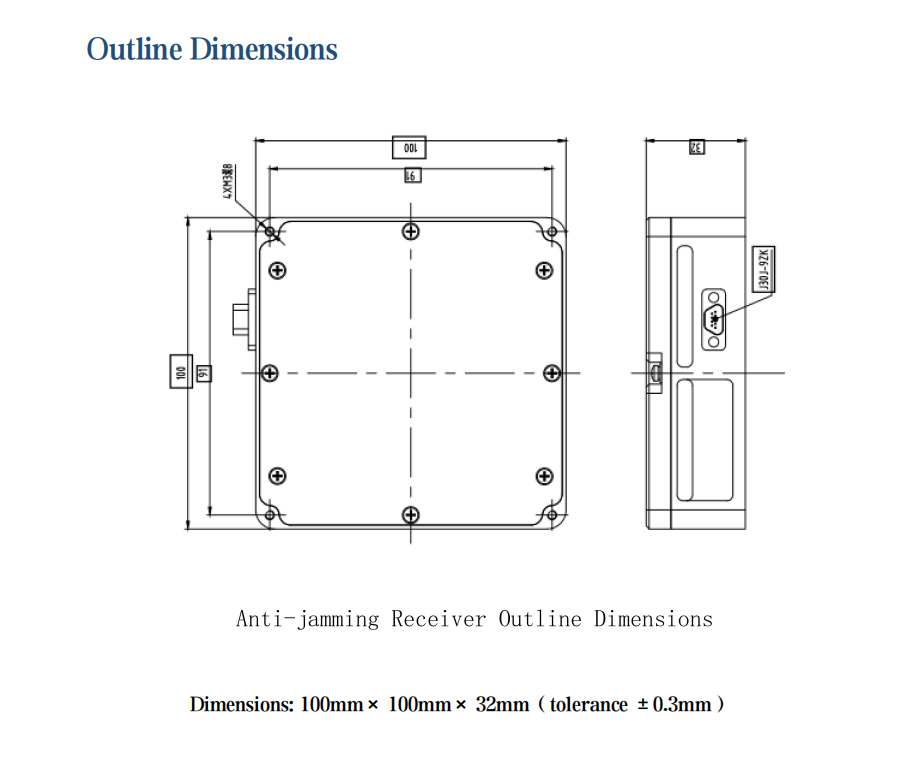
Compact integrated GNSS receiver module measuring 100 × 100 × 32 mm and weighing under 500 g, reducing payload burden and simplifying installation on small UAV platforms.
Multi-Type Interference Suppression
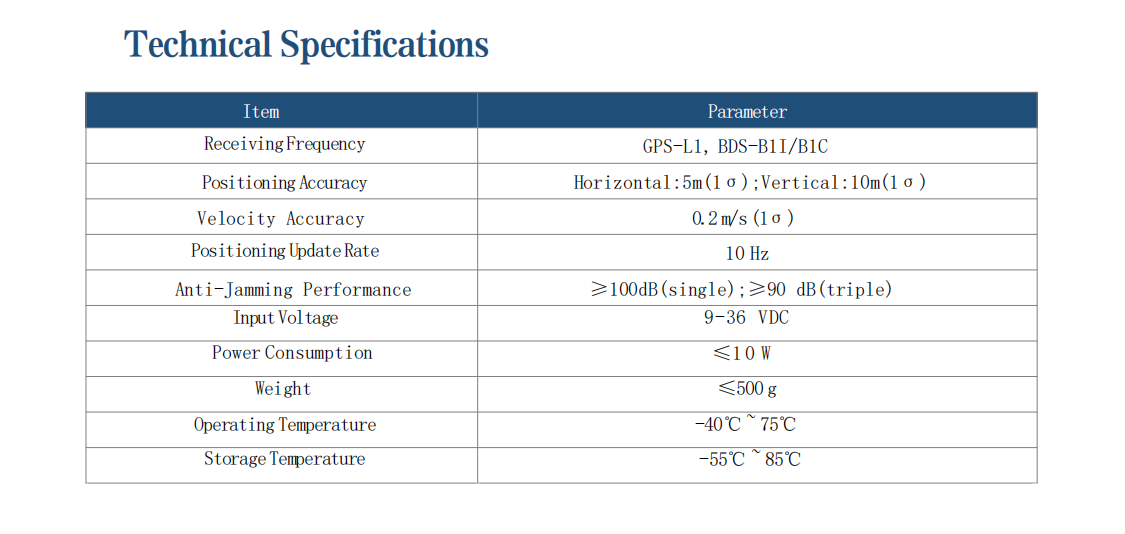
Counters broadband, pulse, narrowband, and sweep jamming with verified ≥100 dB single-source and ≥90 dB triple-source suppression.
Dual-Constellation Support
Simultaneous GPS-L1 and BDS-B1 tracking improves satellite availability and enhances positioning stability in complex RF interference environments.
Low Power Consumption
Below 10 W during active anti-jamming operation — minimizes impact on electric UAV flight endurance.
Stable Positioning Output Under Interference
The GPS BDS anti-interference receiver maintains 5 m horizontal and 10 m vertical positioning accuracy (1σ) with a 10 Hz update rate during continuous jamming suppression.
Wide Operating Temperature Range
Rated for -40°C to +75°C — operational reliability across extreme climates without performance degradation.
Typical Interference Scenarios
The integrated GNSS anti-jamming receiver is designed for environments where communication towers, radar systems, industrial RF equipment, or dense electromagnetic activity may affect satellite signal stability.
(Integrated UAV anti-jamming system architecture for stable GNSS navigation under interference conditions.) Applications
• UAV & Drone Navigation Systems
• Autonomous Ground Vehicles
• Marine & Unmanned Surface Platforms
• GPS/BDS Positioning Systems
• Defense & Security Applications
• Surveying & Mapping Equipment
Related Technical Article
FAQ
What is GNSS anti-jamming?
GNSS anti-jamming is the process of identifying and suppressing radio frequency interference that blocks satellite navigation signals. Because GNSS signals arrive at ground level at approximately -130dBm, they are easily overpowered by jammers transmitting on the same frequency bands. Anti-jamming receivers use signal filtering, adaptive suppression, and multi-antenna spatial processing to reject interference while maintaining continuous satellite tracking and positioning output.
How does anti-jamming technology work?
Anti-jamming technology works through layered protection. First, the receiver correlates incoming signals against known satellite PRN code sequences and filters out anything that does not match. Second, it identifies the type of interference present—broadband, pulse, narrowband, or sweep jamming—and applies the appropriate suppression algorithm automatically. Third, a multi-antenna array creates reception nulls toward interference sources while maintaining gain toward satellites. The result is verified suppression performance of ≥100 dB against a single interference source and ≥90 dB when three sources are active, with positioning accuracy maintained at 5 m horizontal and 10 m vertical (1σ) throughout.
Can the receiver operate under RF interference?
Yes. The HFD2101-2 is specifically designed for continuous operation in intensive electromagnetic countermeasure environments. It counters four interference types—broadband, pulse, narrowband, and sweep jamming—simultaneously. While performing active suppression, it maintains stable positioning output at 5 m horizontal accuracy and delivers updates at 10 Hz, ensuring the host platform receives uninterrupted navigation data.
Which platforms support this receiver?
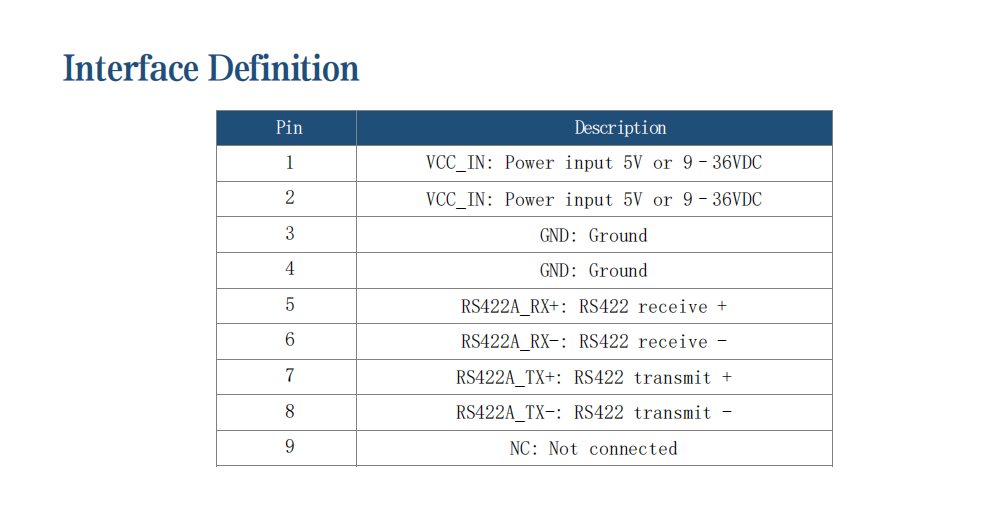
The receiver is designed for small fixed-wing UAVs, unmanned surface vessels, and various ground vehicles. Its compact integrated form factor—100 × 100 × 32 mm and under 500 g—combined with a 9–36 V DC input range and RS422 serial interface, enables straightforward integration onto platforms with limited payload capacity and standard vehicle electrical systems.As a compact integrated GNSS receiver module, the HFD2101-2 supports straightforward deployment across UAV, vehicle, and autonomous platform applications.