


Send Message
Privacy statement: Your privacy is very important to Us. Our company promises not to disclose your personal information to any external company with out your explicit permission.
 Product Categories
Behind those search results is a clear user intent:
engineers and system integrators are trying to solve real problems caused by unstable power quality, not just learn theory.
And those problems are becoming more common.
In industrial environments, especially where variable frequency drives (VFDs), inverters, or long motor cables are involved, power systems rarely behave ideally.
Typical issues engineers search for include:
Sudden inrush current damaging drives
Excessive harmonic distortion (THD)
Overheating of capacitors or rectifier bridges
Motor insulation stress caused by high dv/dt
Unexpected inverter trips or shortened equipment lifespan
Most online articles explain what these problems are. Fewer explain why they happen together — and even fewer explain how the right AC reactor choice changes the whole system behavior.
One key insight from analyzing high-ranking technical blogs is that users often confuse input and output reactors, or assume they are interchangeable. They are not.
Installed on the input side of an inverter, an input AC reactor primarily helps to:
Limit inrush and peak current during startup
Suppress grid harmonics
Improve real power factor
Smooth distorted input current waveforms
Protect the drive from transient overvoltage
In practical terms, this means fewer nuisance trips, less stress on rectifier bridges, and a noticeably more stable upstream power system.
Output AC reactors are used between the inverter and the motor, solving a different set of problems:
Reducing dv/dt stress on motor windings
Lowering motor noise and eddy current loss
Limiting leakage current caused by high-order harmonics
Extending motor service life, especially with long motor cables
If you’ve ever dealt with unexplained motor failures in inverter-driven systems, this is usually where the root cause lives.
Many generic articles recommend “adding an AC reactor” without discussing design details. That’s where theory stops and real-world engineering starts.
From field experience, the most overlooked factors include:
Magnetic material selection (silicon steel, ferrite, Amorphous Core)
Winding structure and its impact on DC resistance and short-circuit strength
Thermal class and insulation system under harsh operating conditions
Noise control, especially in indoor or cabinet installations
An AC reactor that looks fine on paper can still run hot, vibrate excessively, or fail prematurely if these details are ignored.
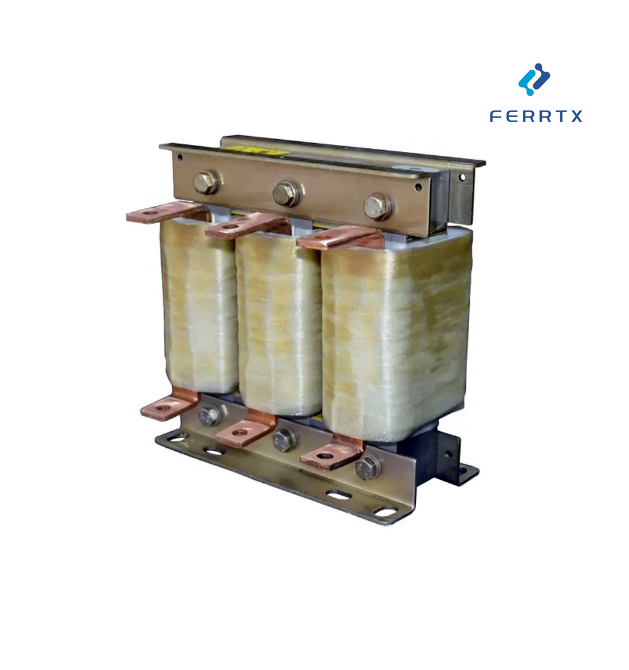
A properly engineered AC reactor isn’t just an inductor — it’s a protective component designed for long-term system reliability.
Key design characteristics that consistently show up in high-performance applications include:
Foil winding structures for low DC resistance and strong electromagnetic force resistance
Low magnetic flux density design to maintain linearity under overload
F-class or higher insulation systems for stable operation in demanding environments
Vacuum pressure impregnation (VPI) to reduce noise and improve mechanical strength
Low-loss, grain-oriented silicon steel cores to minimize temperature rise
These design choices directly translate into longer drive life, quieter operation, and fewer system failures — the exact outcomes engineers are searching for when they look up AC reactors online.
Whether you’re designing a new inverter system or troubleshooting an existing one, AC reactors are often the simplest upgrade with the highest impact.
They don’t replace harmonic filters or sine filters — but when selected correctly, they dramatically reduce the burden on every component downstream.
And that’s the real takeaway missing from most search results:
AC reactors don’t just solve one problem. They rebalance the entire power system.
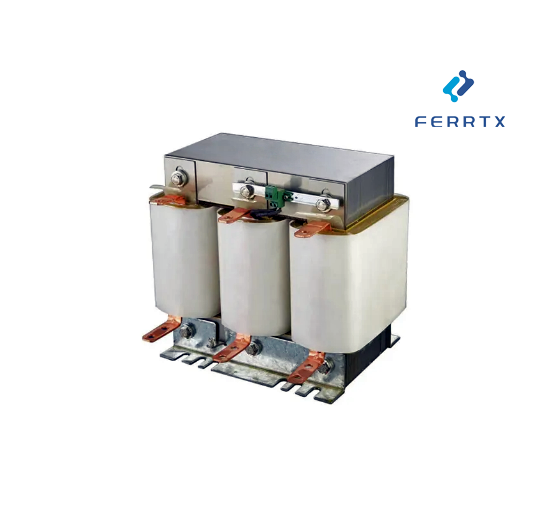
If you’re evaluating AC reactors for input or output applications, especially in VFD-driven systems, the right questions to ask go beyond inductance values:
What overload conditions will it face?
How long are the motor cables?
What harmonic levels are acceptable?
How critical is noise and thermal performance?
Can the reactor be tailored to the system frequency and operating profile?
These questions define whether an AC reactor becomes a long-term safeguard or just another component on the BOM.
If you’d like to discuss how AC input or output reactors can be selected or customized for your specific application, feel free to reach out at
sales@ferrtx.com
Sometimes, the smallest component makes the biggest difference in system reliability.


Privacy statement: Your privacy is very important to Us. Our company promises not to disclose your personal information to any external company with out your explicit permission.
Fill in more information so that we can get in touch with you faster
Privacy statement: Your privacy is very important to Us. Our company promises not to disclose your personal information to any external company with out your explicit permission.