


Send Message
Privacy statement: Your privacy is very important to Us. Our company promises not to disclose your personal information to any external company with out your explicit permission.

 Product Categories
This week’s roundup highlights several key developments shaping the power electronics landscape — from advances in digital power conversion and silicon carbide integration in AC motor drives to emerging ideas around compact fusion reactors.
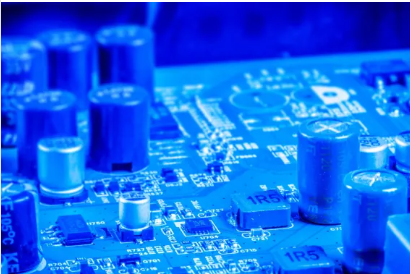
Digital control is gaining traction in high-voltage power systems. Traditional analog loops that required manual tuning are being replaced by digital control loops capable of real-time adjustment. These digital architectures improve regulation precision, enhance dynamic performance and offer flexibility in handling varied load conditions. Such capabilities are increasingly critical in applications where efficiency and stability are paramount.
Although silicon-based IGBT devices have dominated AC motor drive systems for years, silicon carbide (SiC) components are now being evaluated for their performance and efficiency benefits. SiC’s higher switching speed, superior thermal handling, and lower losses can translate into improved system efficiency and power density. As a result, designers in industrial and automotive sectors are reconsidering how SiC can be integrated into next-generation motor drives to achieve better overall system outcomes.
Industry updates include expanded portfolios of high-voltage SiC power modules, catering to diverse topologies such as half-bridge and full-bridge configurations. These modules address the need for compact yet robust building blocks suitable for high-efficiency converters and inverters. Additionally, innovations in digital power monitoring technologies are enabling battery-powered designs to operate more efficiently, extending run times by improving measurement precision and reducing energy waste.
Beyond terrestrial power electronics, early technical conversations are emerging around small fusion reactor concepts intended for challenging environments. These compact fusion energy sources, still in conceptual stages, hint at future intersections between advanced power electronics and novel energy generation. Such technologies could provide resilient power in remote or extreme conditions, expanding the role of power electronics beyond conventional energy systems.
Power electronics continues to play an essential role across industries such as automotive, industrial automation, energy storage, and renewable systems. The shift toward digital control enhances performance precision and adaptability, while silicon carbide devices are driving efficiency improvements in power conversion and motor systems. Looking further ahead, fusion energy concepts demonstrate the expanding relevance of power electronics in addressing future energy challenges.


Privacy statement: Your privacy is very important to Us. Our company promises not to disclose your personal information to any external company with out your explicit permission.
Fill in more information so that we can get in touch with you faster
Privacy statement: Your privacy is very important to Us. Our company promises not to disclose your personal information to any external company with out your explicit permission.