


Send Message
Privacy statement: Your privacy is very important to Us. Our company promises not to disclose your personal information to any external company with out your explicit permission.

 Product Categories
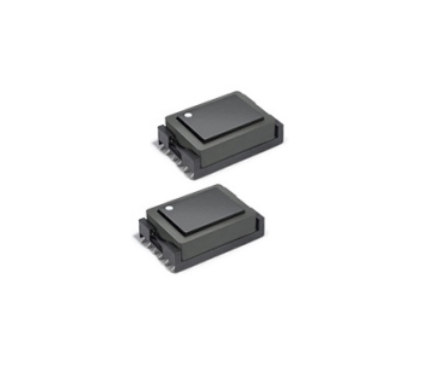
Common topologies used for CCFL inverters include push–pull current-source parallel-resonant (CSPRI), Royer, half-bridge, and full-bridge resonant architectures. Each topology offers tradeoffs:
Push–pull / CSPRI — excellent for smooth sinusoidal output and efficient steady-state operation; commonly used for battery-powered and display backlight designs.
Royer — simple and compact for low-power modules; good striking behavior but limited control flexibility.
Half-bridge / Full-bridge resonant — better for multi-lamp and higher power designs; allow soft-switching and improved efficiency when paired with proper resonant tank tuning.
Choose a topology by balancing lamp count, power level (typically 1–6 W per transformer for many CCFL applications), and cost/manufacturability constraints.
The transformer must be designed together with the resonant capacitor(s). Application notes emphasize that the magnetizing inductance of the transformer and the chosen capacitance set the resonant frequency and striking dynamics. Iterative tuning of these elements is required to ensure reliable lamp ignition while minimizing stress and losses during steady operation. Poorly matched tanks increase both start-up stress and steady-state dissipation.
Practical tips:
Design the transformer magnetizing inductance to achieve the intended resonance range (document expected Fstart/Fmin ranges in your spec).
Minimize leakage inductance for better energy transfer to the lamp during strike, but leave enough series inductance to limit surge currents.
Low-loss ferrite materials and geometries (frame + bar, EFD, or flat SMD bobbins) are preferred for thin, low-profile CCFL Transformers. Frame/bar assemblies improve repeatability and mechanical mounting — important for automated assembly and consistent inductance. Use ferrite mixes optimized for your operating frequency (commonly tens to low hundreds of kHz depending on topology).
Winding guidance:
Use interleaved or carefully layered windings to control stray capacitance and to reduce partial discharge risk at high secondary voltages.
Choose bobbin materials and creepage/clearance distances to meet HV safety standards for CCFL (many designs require >1kV isolation performance).
High secondary voltages (strike voltage often >1kV RMS) make partial discharge, corona, and insulation breakdown real risks.
Maintain adequate creepage and clearance, compound potting if needed, and conformal coatings in production to reduce arcing risk.
Design secondary winding geometry and potting to suppress high-frequency ringing and to protect against moisture and mechanical vibration.
Efficiency gains in CCFL transformers come from reducing core and copper losses and optimizing the overall inverter system for soft-switching operation where possible.
Select ferrite materials with low core loss at your operating frequency.
Use thicker copper or parallel strands for windings to reduce DC/AC losses while considering winding space limits.
Consider potting/encapsulation strategies that assist heat dissipation while providing insulation.
From the controller side (ICs like LTC1697 / MAX8751 and others) to magnetic tolerances, iterative testing is essential:
Validate lamp strike across temperature range, input voltage variations and lamp aging. Controllers often include strike/maintenance modes — design the transformer to perform within those modes.
Run environmental and safety testing (HV withstand, partial discharge, thermal cycle, vibration). Record pass/fail rates and tighten process controls on bobbin/winding assembly to improve yield.
If you’re selling transformers or offering custom designs, present clear, engineer-friendly data sheets: electrical specs (magnetizing L, leakage L, turns ratio, recommended topology), mechanical drawings (mounting, height), insulation class and recommended operating frequency range. Product pages that combine concise specs with application notes and reference circuits convert best with B2B procurement and design engineers.
Pick topology by lamp count & power (push–pull / half-bridge / full-bridge).
Co-design transformer magnetics and resonant tank; iterate tuning.
Use low-loss ferrites, frame/bar or EFD formers for repeatable, low-profile assemblies.
Prioritize insulation, creepage/clearance, and potting for HV reliability.
Provide engineers with clear datasheets, reference circuits, and downloadable PDFs to speed buyer qualification.


Privacy statement: Your privacy is very important to Us. Our company promises not to disclose your personal information to any external company with out your explicit permission.
Fill in more information so that we can get in touch with you faster
Privacy statement: Your privacy is very important to Us. Our company promises not to disclose your personal information to any external company with out your explicit permission.