


Send Message
Privacy statement: Your privacy is very important to Us. Our company promises not to disclose your personal information to any external company with out your explicit permission.

 Product Categories
Despite short-term fluctuations, SiC remains one of the most critical wide-bandgap semiconductor materials for next-generation power electronics—supporting higher efficiency, lower losses, and improved thermal performance.
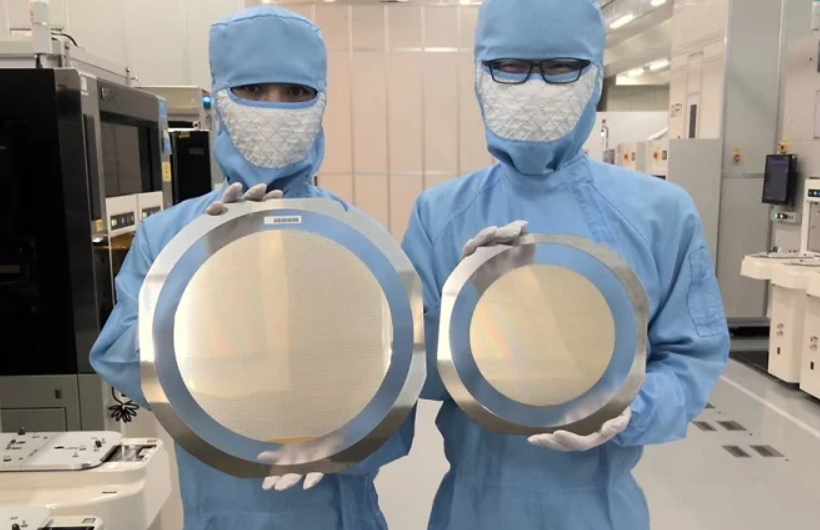
Although some industry players are restructuring, multiple international companies continue to invest heavily in SiC production lines, automation, and 8-inch wafer capacity.
A major Japanese semiconductor manufacturer recently completed a new facility dedicated to 8-inch SiC wafer processing. The modern fab integrates advanced automation and is expected to begin mass production around 2027. This expansion reflects Japan’s long-term commitment to maintaining leadership in high-reliability SiC power devices for industrial, automotive, and renewable energy applications.
In Korea, several companies are consolidating SiC IP and manufacturing technology to offer dedicated SiC foundry services. New production lines targeting 1,200 V SiC MOSFETs are expected to ramp up within the next two years. These foundries aim to serve the growing demand from EV traction inverters, industrial motor drives, solar inverters, and energy-storage systems.
India is emerging as a new player. A leading semiconductor startup has begun constructing the country’s first complete SiC wafer-to-device manufacturing facility. Upon full operation—estimated between 2027 and 2028—the fab will produce up to 60,000 SiC wafers per year, supporting India’s rapidly expanding EV and renewable energy markets.
These developments show that global SiC capacity is still increasing, even as the market undergoes restructuring.
For years, the EV industry was the primary driver of SiC growth. As EV sales slow down in some regions, demand is shifting toward a more diverse set of applications:
Solar inverters, wind power converters, and energy-storage systems are adopting SiC MOSFETs to improve conversion efficiency and reduce system size.
High-power industrial motor drives increasingly rely on SiC for improved switching performance and reduced heat generation.
Next-generation power supplies and server power modules are migrating to SiC devices to achieve higher efficiency and lower energy costs.
SiC plays a critical role in 400–800 V fast-charging stations, offering superior thermal stability and higher voltage handling than traditional silicon IGBTs.
Market research firms predict strong long-term growth for SiC wafers, SiC power modules, and wide-bandgap semiconductor devices, with the global market value expected to multiply over the next decade.
One of the biggest barriers for SiC adoption has been cost. However, several trends are helping reduce prices:
Mass adoption of 8-inch SiC wafers
Better crystal growth yields and defect control
More global competition in raw wafer supply
Improved packaging and module standardization
Vertical integration among major manufacturers
As costs continue to fall, SiC power devices will expand into mainstream industrial and consumer energy applications.
For electronic component producers, distributors, and OEM/ODM suppliers, the SiC market shift offers new strategic opportunities:
More companies will need resilient supply partners for inductors, Transformers, current sensors, EMI components, and power-conversion modules.
These markets require stable long-term suppliers—ideal for B2B component manufacturers aiming to expand internationally.
With India and Southeast Asia entering SiC manufacturing, global procurement channels will broaden, increasing opportunities for cross-border cooperation.
As SiC device designs become more standardized, supporting components (magnetic components, EMC solutions, power inductors, etc.) must evolve accordingly.
The SiC industry is not slowing down—it's transforming. While short-term challenges have reshaped the competitive landscape, global investment, diversified applications, and ongoing wafer technology improvements point toward a strong and stable future.
For B2B manufacturers in the electronics sector, now is the right moment to align with SiC-driven power electronics trends and position themselves as reliable partners in this fast-growing wide-bandgap semiconductor ecosystem


Privacy statement: Your privacy is very important to Us. Our company promises not to disclose your personal information to any external company with out your explicit permission.
Fill in more information so that we can get in touch with you faster
Privacy statement: Your privacy is very important to Us. Our company promises not to disclose your personal information to any external company with out your explicit permission.